
The Supermarket Is About to Break Open — and Most Brands Aren’t Ready
- Ali Marjan
- Nov 24, 2025
- 4 min read
Supermarkets are entering the most dramatic structural shift since the arrival of private label. The industry feels the pressure — shrinking floorplans, online sales climbing, fulfilment becoming centralised — but very few people actually understand why it’s happening or what it means for the next decade.
I’ve spent 20+ years creating brands, supplying national chains, and watching patterns most founders, business owners, BDM, and NPD managers never see.
In simple terms, the supermarket model we all grew up with is dying — and a new one is replacing it fast, in some circumstances around the rapid growth suburuban areas the new model has been receiving trial and refinement.
If you want your brand to survive the next wave, you need to understand where the future is heading.
1. The New Store Format: Real Estate Becomes War
For decades, retail success meant bigger stores and bigger baskets.
That strategy is finished.
Online grocery is finally behaving like its own channel — not a bolt-on. And retailers are restructuring around it.
What’s emerging now is a three-tier system:
1. Large “satellite” flagship stores
Full range
High-traffic
Automated exits
Heavily optimised workflows
Doubles as online fulfilment hubs
These will carry the full supermarket experience — but there won’t be many of them.
2. Smaller metro-style stores
About one-third the footprint
Heavily curated
Faster, mission-based trips
Leaner categories
More food, fewer distractions
These will become the everyday store for most shoppers.
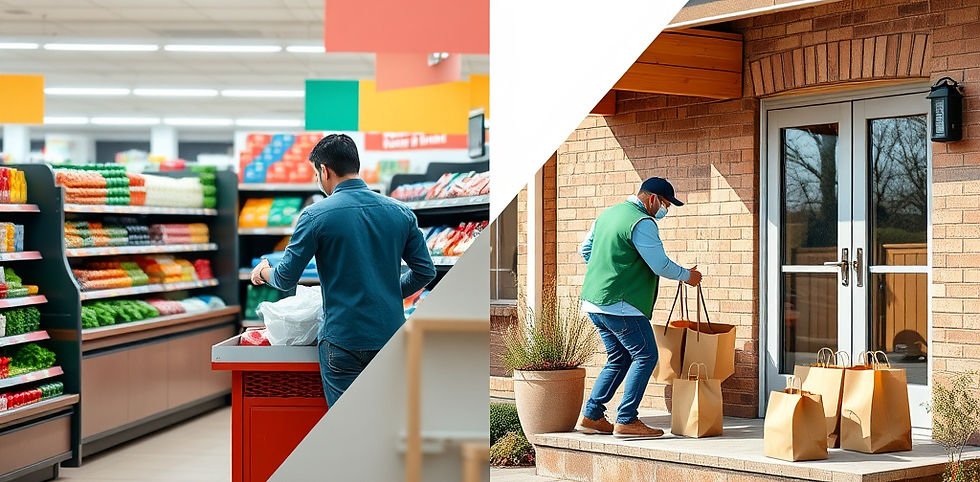
3. Micro stores feeding hyperlocal logistics
Super convenience
Super targeted
Built for immediacy, not exploration
What does this mean?
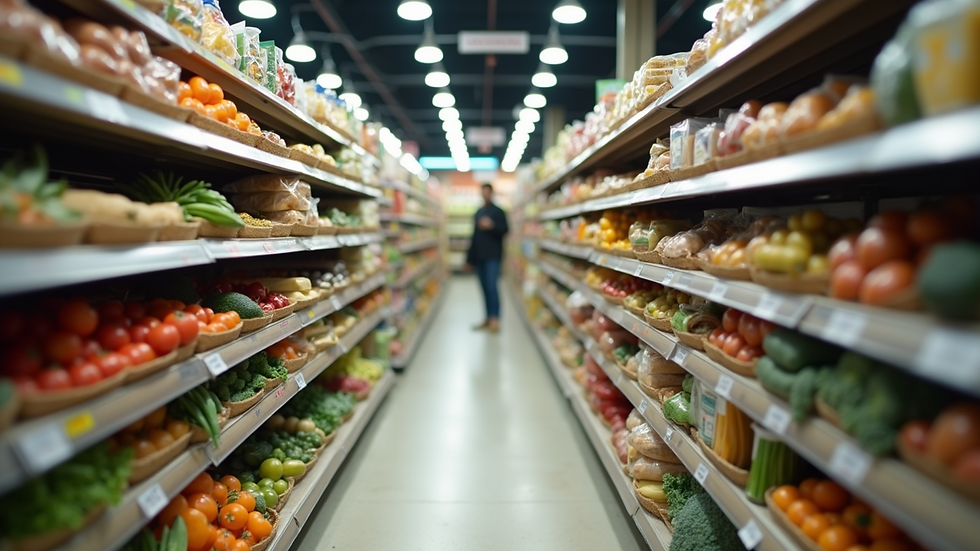
Shelf space is not only shrinking — it’s becoming the most expensive real estate in the food industry.
If your pack doesn’t hit instantly, you’re invisible.
2. Emotional Utility Is Outperforming Wellness Narratives
Retailers say they want better-for-you, cleaner, greener, functional, nutritional.
But their behaviour paints a different picture.
Right now, the winners are the products that deliver:
emotional payoff
comfort
identity
indulgence
nostalgia
instant satisfaction
We’re living in the age of envy, not greed.
People compare themselves to everyone all day long. They want products that ease that feeling — not another lecture about lentils or lab-grown virtue.
This is why “ultra-processed but emotional” is beating “clean but joyless.”
It’s also why many plant-based categories are getting punished — high cost, low satisfaction, low emotional value.
The right path isn’t choosing emotional over functional.
It’s knowing when emotional value needs to lead, and when functional value needs to support. Functional needs to have belonging to a demographic, emotional broadans that demographic.
Most agents/operators still don’t get this, and they build the wrong brand for the wrong era.
3. Retailers Reward What Sells — and Remove What Doesn’t
Retail buyers are under intense pressure.
They can’t keep slow performers, no matter how pretty the deck is.
Yes, they’ll take a risk on something new — but the window has shrunk dramatically.
Private label “innovation programs” weren’t created to take creative risks.
They were created to:
fill obvious gaps,
copy what already works,
extend categories cheaply,
and provide safe, predictable rotation.
True innovation rarely comes from these channels — the shelf life is short because the concepts are shallow.
Meanwhile:
~70% of many SKUs sell during discount weeks
The supplier funds the discount
Weighted average price drops
Margins get destroyed
Retailers make money.Suppliers get squeezed.
This is why your brand must:
communicate instantly
stand out visually
justify full price
create impulse interest
and behave like it belongs in a high-rent district
If your message doesn’t land in three seconds, you’re gone.

4. Packaging Is Becoming Media
The shelf used to be static.
Now it’s turning into a canvas.
We’re entering an era where packaging becomes:
a video
a story
a cross-promo
a loyalty mechanic
a message board
a digital gateway
QR and AR aren’t trends — they’re becoming extensions of the product.
A pack can now change depending on the moment:
In-store: discount, bundle offer, retailer message
At home: brand world, recipes, culture
Post-use: recycling instructions, council notices
Youth appeal: gamified content
Collabs: product-to-product pathways
Packaging is becoming the first three seconds of your brand film.
If you ignore this, you lose a massive advantage your competitors will exploit.
5. What Must Done Next
The next wave of successful food brands will be the ones that:
build ideas faster
visualise packaging instantly
understand shelf behaviour deeply
balance emotional + functional value
create stronger narratives
produce better content
behave like modern brands, not 2010 brands
design for smaller footprints and bigger digital presence
The days of spending $50k–$100k on agencies before you even test an idea?
Finished.
The industry is moving too fast.
6. Why I Built the High Agency Food Innovation Project
Because I watched too many operators burn money, time, and energy on processes that were already outdated.
Because supermarkets are evolving faster than operators realise.
Because most people build brands the old way — slow, expensive, fragmented — and they show up unprepared for the real rules of supermarket behaviour.
And because we’re heading into a future where:
packaging is media,
shelf space is shrinking,
emotional utility is king,
digital behaviour is merging with physical retail,
and brand creation needs to match the speed of the market.
The High Agency Food Innovation Project exists to guide founders through this shift with clarity, relevance, and a system built on real retail logic — not theory.
The Game Is Changing — and This Is the Wake-Up Call
If you understand where the market is going, you don’t fear the changes — you get ahead of them.
Supermarkets are rewriting the rules.
Operators who adapt will build brands the new era needs.
Operators who don’t will disappear, the same way many “healthy but boring” brands already have.
Now is the time to build with intelligence, speed, and relevance.
Contact us today to arrange an obligation free discovery chat, insight is always powerful to those that know how to use it:
O direct email: ali@highagencyfood.com


Comments